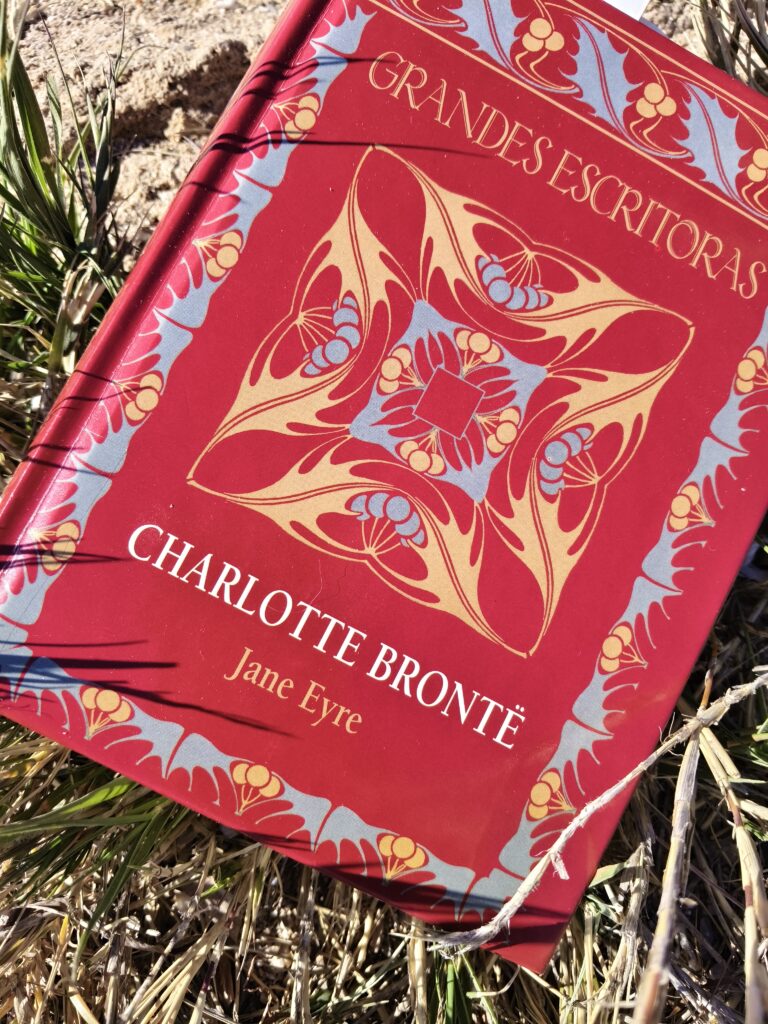
The book ‘Jane Eyre’, written by Charlotte Brontë, the oldest of the Brontë sisters, is a famous Victorian novel published in 1874. It tells the story of the orphan Jane Eyre, who finally gets the chance for happiness and a life on her own terms due to a sudden turn of events and her resolute character.
I picked up this book after watching the film ‘Wuthering Heights’, an adaptation of the novel of the same name by Emily Brontë, and since I liked the topics of the film and had never read any of the books of the Brontë sisters, I decided to give this one a try.
The life of an orphan in 19th-century England
The novel describes the life of the orphan Jane Eyre, who loses her parents and, without anyone else to care for her, ends up living with her aunt and their three children, who mistreat her and make her feel like a bad person (although she consistently tries to become a good Christian). One day, she is sent away to a girls’ school, which is in such a bad state that many of its inhabitants die. However, she survives and through it, receives the education which enables her to become a teacher. As such, she starts working for a man and his daughter. She falls in love with him but as she discovers he is married and cannot marry her, runs away to start a new life.
Even though this book was published in the 19th century, when women’s rights were not what they are today and many women were torn between what the “right thing to do” was and their personal desires, the novel touches upon universal topics such as love and longing and the purpose of life.
Women’s struggles in the Victorian era
While the Christian aspects of Jane’s life, like the upbringing in a religious school and the examples of deeply religious people like her cousin John and her childhood friend Helen, that leave an impression on her and her view on life, as well as the differences between classes of the Victorian time, may be more foreign to many of us nowadays, some topics of the novel are still relevant today.
Jane knows she cannot marry Mr. Rochester, who she is in love with but who she finds out is already married, but at the same time, her heart is telling her to do just that. For me, she was a highly relatable character and the struggle inside herself is palpable on the novel’s pages. Especially since, back in the days in which the novel is set, it was not easy for a young woman to get by without having family bonds or important relationships to sustain her, so she needs to make sure to have an income, while not losing her position in society.
Horror and mystery elements throughout the novel
The novel also contains some elements of horror, such as the character of Mr. Rochester’s wife, who is insane and seems like a ghost the first times Jane sees her because she doesn’t know of her existence. The mysterious element appears for the first time when Jane is a child and is locked inside a room where someone has died. She cannot sleep, feeling haunted all night. Throughout the book, fantastic dreams also serve as omens.
Jane is a character one feels deep empathy with, since her malevolent aunt and her cousins mistreated her as a child and her education in an unsanitary institution almost took her life. One wants her to have a happy life, but also understands that is in her character to be a good Christian, forgive and take the right decisions according to the Christian lessons she was taught, which sometimes contradict her true desires. Overall, a captivating read that takes us modern readers back in time and to the woods of England.